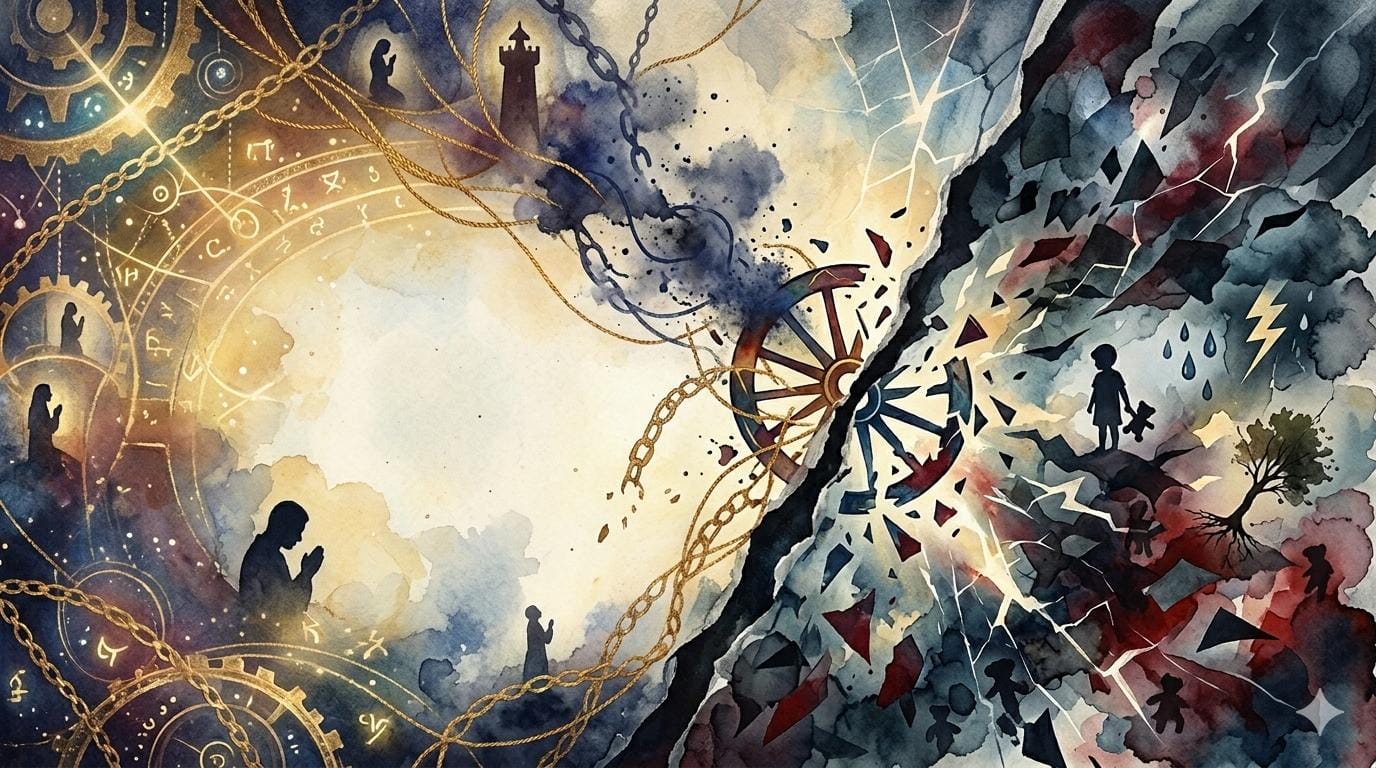
There is a quiet comfort in the idea that the universe keeps score.
That the beggar on the street corner is paying for sins he does not remember, and the billionaire in his glass tower earned every rupee across some cosmic ledger. It is a tidy story. It keeps the chaos of life from feeling too random, too cruel, too honest.
But what happens when you press on it?
Karma’s most common form is cause and effect: a moral gravity where what goes up, comes down on the person who sent it up.
Simple enough. But cause and effect requires two things: a cause, and a person who actually receives the effect. Not a bystander. Not a child who has barely learned to walk.
So let us ask the uncomfortable question.

A two-year-old child dies of an illness she cannot name, in a body she has barely learned to use. Whose karma is this? If the answer is “her past life,” then we have a judge who punishes people for crimes they have no memory of, for a lesson they cannot possibly learn. That is not a moral system. That is cruelty with a philosophical costume.
And what of her parents? If their grief is karma, what was their sin? Here is where the system quietly collapses. In a karmic universe, everyone is simultaneously an instrument of someone else’s fate. If I rob you, is that my bad karma playing out, or your earned punishment arriving? The system cannot answer that without absolving me entirely. Because if your suffering was destined, then I was merely the delivery mechanism. Every act of cruelty becomes, in karmic logic, an act of cosmic justice. That is not a moral framework. That is a blank cheque for the powerful.
The “next life” argument tries to patch these holes but tears open new ones. Nobody remembers their past life. If karma’s purpose is to teach the soul something, a lesson delivered without memory is not a lesson. It is noise. Imagine failing an exam and being told you will understand why in your next attempt, with no memory of sitting it at all.
Some will say karma has value because it nudges people toward doing good today. And that is fair, up to a point. But doing good out of fear that the universe will settle the score is not morality. It is a transaction. True kindness does not keep a ledger.
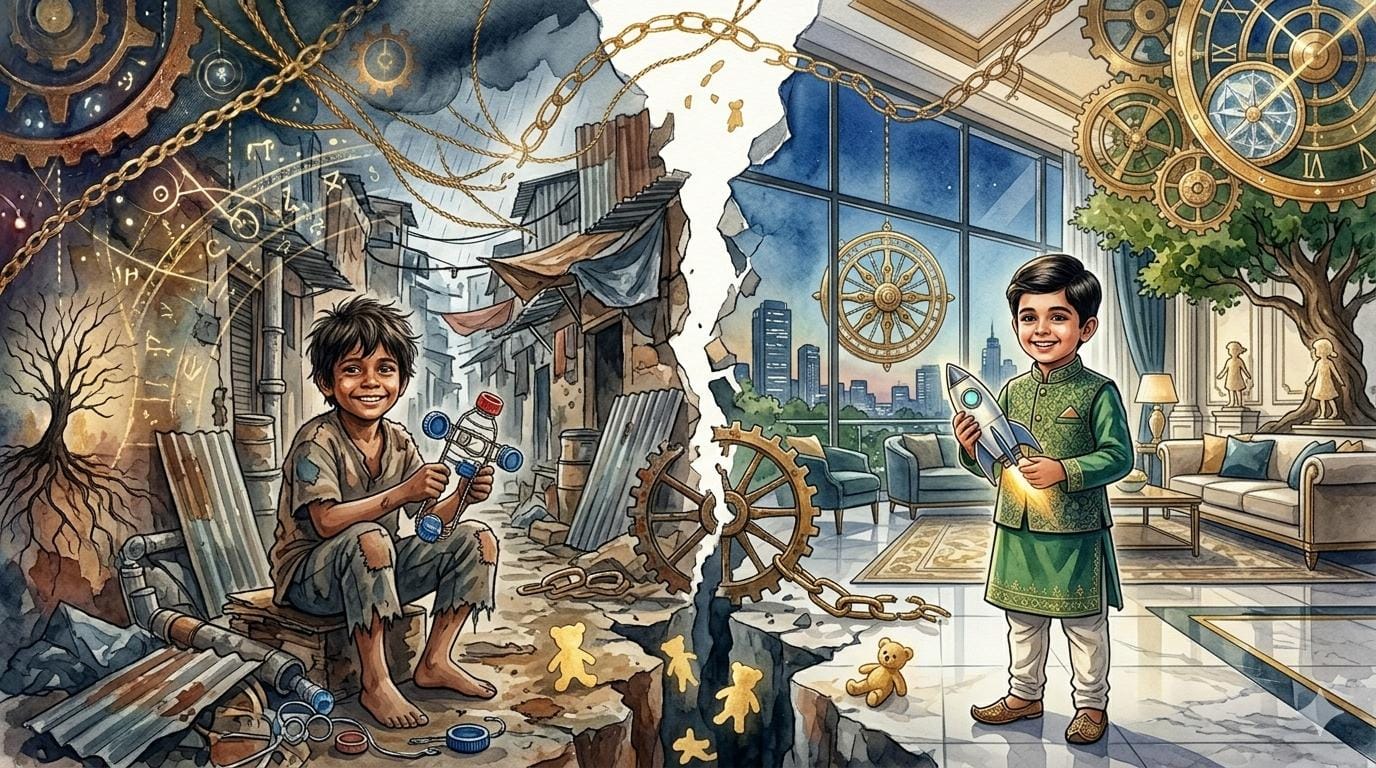
And then the question karma’s defenders quietly avoid: whose karma was it to be born to a billionaire? Whose karma placed someone in a drought-prone village, inheriting debt before they inherited a name? If the answer is “past deeds,” then we have built a philosophy that asks the poor to deserve their poverty. It is not wisdom. It is the oldest trick in the book: make suffering feel earned, and the suffering person stops demanding change.
Karma is seductive because randomness is terrifying. The idea that a child can die for no reason, that good people can have terrible lives, is genuinely hard to sit with. So we reach for karma. It gives the chaos a shape.
But a comfortable answer is not the same as a true one. And perhaps accepting that some suffering has no reason, no past-life invoice, no cosmic purpose, is not despair. It might be the beginning of something rarer: genuine empathy, owed to no one, earned by nothing, given simply because another person is hurting.